PolitiQuote

Discover video-sourced quotes by politicians

Ron Johnson: “If you take, for example, Clinton in 1998, I think he spent…”

Featuring: Ron Johnson, Republican | U.S. Senate, Wisconsin

Watch on YouTube

Senator Ron Johnson's Wisconsin Town Hall: Addressing Federal Spending, Medicaid, and Immigration Concerns

Published | Video Starts at 04:34

… on spending through rescission packages, through the appropriation process, but maybe through another reconciliation package or two, again, return to a reasonable pre pandemic level spending. And quick, describe that. If you take, for example, Clinton in 1998, I think he spent some at $1.7 trillion. If you increase that based on population inflation, spend what we're spending on Social Security, Medicare and interest, leave those alone. But all other outlays just increase by population inflation growth, we'd be spending about 5.5 trillion versus the 7 trillion. Again, I don't think we spent too little in 1998. If you do the same thing for Obama 2014, that'll be about 6.2 trillion. If you do Trump's 2019 spending, it'd be about 6.5. (04:34–04:57)

CLAIM

Asserts that adjusting 1998 spending for inflation and population would result in $5.5 trillion spending today.

This is an excerpt from a raw transcript. The assertions have not been audited or verified. Tap the video to view the source footage and understand the context.
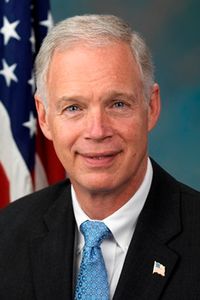

Ron Johnson

Discover more from

Ron Johnson

Report A Transcription Error

Please report any error in the automated transcription.

About PolitiQuote

PolitiQuote is a civic library index to statements made by politicians in publicly available video records. The index is created automatically from transcripts, with no editorial oversight or analysis. Highlighted quotes are selected by AI. Words may be added in parentheses to offer context for the quote. There may be errors in the transcription and display, so listen to the video to ensure accuracy.

PolitiQuote is a service of Gigafact Foundation, a nonpartisan nonprofit advancing facts and information transparency, community by community.

Visit gigafact.org to learn more.